tattoos
Showing posts with label Sedan. Show all posts

Tuesday, July 12, 2011

2011 Audi Q7 TDI Quattro - Road Test Update

2011 Audi Q7 TDI Quattro
Date: June 2011
Months in Fleet: 10 months
Current Mileage: 32,700 miles
Average Fuel Economy: 21 mpg
Range: 581 miles
Service: $987
Normal Wear: $0
Repair: $0
Unscheduled Urea-Solution Additions: $14
Damage and Destruction: $458
Just four months ago, our Audi Q7 TDI had fewer than 16,000 miles on the clock. We’re now at more than 32K, numeric proof of the big brown crossover’s popularity.
The esteem and the miles spring from the Q7’s prowess for long-haul road trips and its aptitude for towing, talents staffers often exploit at the same time. On one run to the left side of the country, Tony Swan called upon the Audi to shoulder his Honda S2000 race car; he dropped it off in California and returned lugging a freshly purchased 1964 Volvo 544. The loads were about a ton shy of the 6600-pound towing capacity; with the cruise control set to extra-legal velocities, the Q7 whuffled along with nary a complaint, easily maintaining its speed even up steep hills. Speaking to the overall comfort and supportive seats, it was only at the end of a grueling 1200-mile day that Swan began crying for mercy.
Other long trips include one undertaken by editor-in-chief Alterman, who didn’t tow, but he did haul ass from Detroit to Manhattan and back, covering the 640-mile return leg in just over nine hours. There were a couple of stops, but taking on fuel wasn’t an absolute necessity: We’re regularly getting well over 600 miles per tank on freeway grinds. We’ve also been to Kentucky (twice) and Florida, and spent more than a few weekends exploring the northern reaches of our cartographic mitten. Even so, overall economy has dipped down by 1 mpg to 21 since our last update.
Tire Noise Returns—But So Do the Gorgeous Wheels
The Q7’s winter Dunlops came off around the 25K mark, which meant a return to the summer Dunlops—and the reappearance of the humongous and handsome 21-inch rims. Unfortunately, the swap back to the firmer compound gave road warts some of their bite back, and the fat Sport Maxx tires are as noisy as ever.
More recently, a small rock punctured the right rear, and the process to change it out was more complicated than a simple stop-and-swap. The Vredestein compact spare lives under the cargo floor, but you need to remove the subwoofer from inside the rim before taking out the tire. The spare also comes uninflated. A small compressor is provided to blow in the required 51 psi, but it should be run for only 12 minutes at a time—lest it melt itself into a puddle of brown plastic—so at least one cool-down period is necessary before the spare is ready. Then, if your Q7 is equipped with the air suspension like ours, be sure to activate “jack mode” through the main MMI system. The rest is pretty standard—jack up the corner, remove the five lug bolts, install the spare, and tighten everything back down—but the process took us nearly an hour, including packing up. And that doesn’t take into account the time lost due to the spare’s 50-mph maximum recommended speed. Plan your flat tires accordingly.
The Q7 is for the most part wearing its miles well, although the leather on the front-seat bottoms has wrinkled some and the “Start Engine” button has shed most of the little silver triangles that form each N.
Costs are Piling Up
We’ve incurred $846 in out-of-pocket expenses since our last update, $458 of which went to mounting and balancing ($46) a new right rear tire ($412). The remaining $388 went to the 25K service, which included an oil-and-filter change, a flush and fill of the AdBlue urea-injection system, some wiper fluid, and inspections of the windshield and headlamp washer systems, the brakes, the wipers, and tires.
If any of us were harboring delusions that the Q7 would be an inexpensive vehicle to maintain, the nearly $1500 we’ve spent thus far has well and truly squelched them. Still, the Q7’s versatility, pleasant dynamics, and comfort mean we’re not looking forward to its departure—even if our wallet might be.

Specifications

VEHICLE TYPE: front-engine, 4-wheel-drive, 7-passenger, 5-door wagon

PRICE AS TESTED: $70,025 (base price: $51,775)

ENGINE TYPE: turbocharged and intercooled DOHC 24-valve diesel V-6, iron block and aluminum heads, direct fuel injection

Displacement: 181 cu in, 2967 cc
Power (SAE net): 225 bhp @ 3750 rpm
Torque (SAE net): 406 lb-ft @ 1750 rpm

TRANSMISSION: 8-speed automatic with manumatic shifting

DIMENSIONS:
Wheelbase: 118.2 in Length: 200.3 in
Width: 78.1 in Height: 68.4 in
Curb weight: 5687 lb

PERFORMANCE: NEW
Zero to 60 mph: 8.3 sec
Zero to 100 mph: 26.6 sec
Zero to 110 mph: 36.7 sec
Street start, 5–60 mph: 9.1 sec
Standing ¼-mile: 16.4 sec @ 83 mph
Top speed (governor limited): 126 mph
Braking, 70–0 mph: 162 ft
Roadholding, 300-ft-dia skidpad*: 0.85 g
FUEL ECONOMY:
EPA city/highway driving: 17/25 mpg
C/D observed: 21 mpg
Unscheduled oil additions: 0 qt

WARRANTY:
4 years/50,000 miles bumper to bumper;
4 years/50,000 miles powertrain;
12 years/unlimited miles corrosion protection;
4 years/unlimited miles roadside assistance;
1 year/5000 miles free routine maintenance
*Stability-control-inhibited.
Source : Caranddriver.com

Friday, July 8, 2011

Honda S2000, 2000-2009 - Used Vehicle Review

Read about the Autos.ca Used Vehicle Review: Honda S2000, 2000-2009
You might have called it Honda’s mid-life crisis, but unlike the 50 year-olds who go out and buy a sports car, Honda celebrated its 50th by building one.
A sporty Honda isn’t tough to wrap your head around, but for a company whose most overtly sporty car to that point was a Civic with 160 horsepower, the S2000 was Honda’s and-now-for something-completely-different moment, with a screaming 9,000-rpm four-cylinder good for 240 horses.
At the time, the S2000′s engine boasted the highest specific power per volume of any naturally-aspirated (that is, not turbo- or supercharged) production motor. That is to say, it produced more power per litre of displacement than any other naturally-aspirated engine in a car available in a showroom. The motor was mated to a standard six-speed manual transmission (the only one available) and a Torsen limited slip differential.
Used Vehicle Review: Honda S2000, 2000 2009 auto articles
In 2004, Honda made some cosmetic and mechanical tweaks to the S2000. Most significantly, these included bumping the engine’s displacement to 2.2 litres by way of a longer piston stroke; horsepower remained the same, but torque increased to 162 lb-ft at 6,200 from the previous peak of 153 lb-ft at 7,500 rpm. The longer stroke resulted in a lower redline of 8,000 rpm.
In addition to the larger motor, the transmission got shorter ratios for gears one through four and taller ratios for fifth and sixth.
In 2006, Honda added a drive-by-wire throttle and Vehicle Stability Assist.
For 2008, the S2000 gained a tire pressure monitoring system, updated dash and gauges and a few new colours.
For a full list of differences between 2000-2003 and 2004-2009 cars, check this thread.
In typical Honda fashion, fuel consumption is decidedly palatable for a sports car, with EnerGuide ratings of 11.8 L/100 km (city) and 8.4 L/100 km (highway). Autos.ca contributors Paul Williams and Frank Rizzuti, both S2000 owners, report that those figures are quite realistic in real-world driving. Premium fuel is a requirement, though. Reliability has been solid, generally, but Consumer Reports (CR) data indicates a few things to watch for. One is what CR dubs the potential for “major” engine problems in 2003 through 2005 models. The publication doesn’t provide specifics, but possibilities include a stuttering engine caused by a bad manifold air pressure (MAP) sensor or an ignition system misfire, which can be caused by any number of things. Source : autos.ca

Wednesday, June 8, 2011

Tesla Model S EV Sedan

Tesla Model SUAC.com - The new electric Tesla Model S  production is scheduled to begin in mid-2012, starting with the Signature Series, and continuing with the 300-mile batteries, followed by 230-mile and 160-mile battery options later that year. Tesla will offer three battery options, the 160-, 230-, and the 300-mile range. The Model S will come standard with the 160-mile range battery with the 230-mile and 300-mile range batteries as optional upgrades. The Model S Signature will also come with the 300-mile range battery and will have limited edition offerings with colors and options not available for Model S.
The Model S will have a top speed of approximately 125 mph, a 0-60 mph time of approximately 5.6 seconds, and a single-speed gearbox. It will feature a standard 17” infotainment touchscreen on every Model S with in-car 3G connectivity for streaming radio and gps navigation, a liquid-cooled, floor-mounted battery pack, and panoramic glass roof and rear-facing child seats as planned optional upgrades.
Charing the Model S can be as simple as plugging into any regular 110 volt wall outlet. A 220 volt outlet, like the ones that are used for kitchen stoves and clothes dryers, will be able to charge the Model S more quickly, from empty to full overnight. At a fast charging station, the Model S is capable of recharging in 45 minutes. The Model S also uses regenerative braking to recharge the battery as well.
Tesla CEO Elon Musk says that the company could cover cross-country drives with 13 charging stations and 8 to 10 stations to cover the U.S. coasts. With each station costing about $25,000, “for a couple million dollars you have covered the country”.
The Tesla Model S will retail for $57,400 (or $49,900 base price after the $7,500 Federal Tax Credit). The 230-mile range battery option will retail about $10,000 more than the base and the 300-mile range battery option at about $20,000 more than the base. Expect to see deliveries of the Model S sometime around the summer 2012. Tesla wants to produce a total of 5,000 of the cars in 2012 and already has 4,600 reservations for the Model S which should cover first year of production.

Thursday, May 19, 2011

2013 Chevrolet Cars Sedan Sport Malibu

2013 Chevrolet Cars Sedan Sport Malibu
General Motors (GM) finally decided to release two new variant of Chevrolet Sedan Sport Cars Malibu 2013 at two prestigious exhibition of the Shanghai Auto Show 2011 and the New York Auto Show 2011. One of the firm‚ most important models in years. The new Malibu sports sedan a new exterior styling with lines and curves inspired from Chevy‚ most recent models such as the Cruze up front and even the Camaro at the back with the LED dual-element taillamps. The exterior design of the all-new Malibu carries DNA from its sister vehicles, the Camaro and Corvette, to bring a sporty sensibility to the family sedan sports car segment.
2013 Chevrolet Cars Sedan Sport Malibu comes with featuring a more fluid design with a prominent instrument panel incorporating a pair of Camaro-esque circular gauges set in squared-off housings, and a new top-hinged, flat panel display on the center console that articulates up and down revealing a six-inch-deep hidden, illuminated storage compartment. In the US, the 2013 Chevrolet Cars Sedan Sport Malibu will be offered with Chevrolet‚ new MyLink infotainment package that integrates wireless connectivity through Bluetooth.
2013 Chevrolet Cars Sedan Sport Malibu
As in the eAssisted LaCrosse and Regal, the Malibu Eco pairs a 2.4-liter four-cyliner engine with a six-speed automatic transmission, fitting a motor-generator where the alternator would live. The system can provide up to a 15-hp boost using energy stored in the lithium-ion battery, which gets its charge from regenerative braking. The system is enhanced by other miserly tech pieces like a stop/start system, low-rolling-resistance tires, underbody trays, and active aero flaps in the grille that open or close at speed to meter the flow of cooling air and further aid economy. We’ve recently driven the LaCrosse eAssist and came away impressed by its relative seemlessnes. The verdict is still out on real-world economy, but we expect the same level of refinement from the system as installed in Chevrolet’s ever-important Malibu.
2013 Chevrolet Cars Sedan Sport Malibu
The 2013 Chevrolet Cars Sedan Sport Malibu engine has more than 190-hp with maximum torque of 180 lb-ft estimated. The engine is backed by a Hydra-Matic 6T40 six-speed automatic, which helps to achieve improved fuel economy and performance. GM has yet to be resolved and the fuel consumption and performance figures.
2013 Chevrolet Cars Sedan Sport Malibu
Medium sports sedan car body has also been cut by 4.5 inches, but the overall length remains the same. While the width is increased to nearly 3 inches. Along with a smaller size, Malibu 2013 will also save money in the engine lineup. 2013 Chevrolet Cars Sedan Sport Malibu offers a new engine 190-hp 2.5-liter four-cylinder. DOHC Ecotec engine is also expected to create 180-feet of torque. Six-speed automatic transmission will be the only gearbox is only available to U.S. buyers.
2013 Chevrolet Cars Sedan Sport Malibu
The new 2013 Chevrolet Cars Sedan Sport Malibu also gets 62-inch (1,574 mm) front and rear tracks that are more than 2 inches (51 mm) wider than before. As a result, GM claims that the 2013 Malibu offers nearly 4 cubic feet (113 L) of additional interior volume, along with increased front and rear shoulder and hip room, plus more than 1 cubic ft. of extra trunk space at 16.3 cu.ft (462 lt).
The Eco will be the first of the 2013 Chevrolet Cars Sedan Sport Malibu available, beginning in early 2012, followed by the LS, LT, and LTZ models later that summer.

Sunday, May 1, 2011

2011 Chevrolet Cruze

2011-Chevrolet-Cruze-Front-View-Red-ColorThis is some information about the Chevrolet Cruze elegant sedan. 2011 Chevrolet Cruze with a handsome design that speaks to the size of the vehicle. In the end the higher trim levels or with the optional RS aero package, we could even say it's elegant, added brightwork to add class and skirt package provides a lower view reminiscent of European sporty sedans.

2011-Chevrolet-Cruze-Front-Side-View-Red-ColorWe usually do not dedicate as much time as they design elements are often best appreciated though photography, but a few items on the Cruze's important to put forward. For starters there is a strong Bodyline and three-window designs that add length to the car. The high beltline gives the appearance of sophisticated - but not so high that affect visibility (Camaro we're looking at you). Then there's the bold front end. And finally, the view extends from the lamp to help make the car look wider than that, while the rake angle lights reduce the appearance of the front overhang - is the inevitable part of the front wheel of a car.

2011-Chevrolet-Cruze-Rear-Side-View-Red-ColorTaking samples from 2011 Chevrolet Cruze, the Korean-built Euro-spec and stated that the car had to save GM. Since then we have been bombarded with rhetoric about how global IS compact will be different, are prepared from scratch as a world-beater that would sell in the United States as the aspirations of the compact (oxymoron alert!). We have convincing evidence of the pudding will be in the tasting, and chef today has called us into the kitchen to lick the beaters like some cooks add a pinch of the end of the calibration tuning and repair the line before Cruze out of the oven this September.

2011-Chevrolet-Cruze-Interior-Dashboard-ViewOn hand for our taste test is a competitive benchmark of two vehicles, Coty Honda Civic and Toyota Corolla winner (either 1.8 liters), and three 1.4-liter turbo Cruzes: a 2LT (upscale trim at 70 percent of North American chassis setup will get Cruzes), Eco-fuel economy is optimized, and top-shelf LTZ-optimized handling. Our drive is limited to repeat the six-miles of pavement surface mix in the loop and the evaluation of GM's Milford Proving Grounds.

Before we share the savory sensation, let's recap some basics. First, the Cruze - the fourth to start the whole world - share the most major hardware with global doppelgangers. Whatever we can be installed on the Cruze to other global Cruze if market conditions dictate, but in general we will become the most highly refined. Differentiators vis-a-vis the least refined version (Chinese market), including an acoustic-laminated windshield and a large package of Voice-off (many of which are divided by-Euro diesel Cruze, such as expanding foam in the body cavity, mastic-sandwich firewall, headliner five-layer, triple sealing doors, etc.)

Chassis-wise, all hardware is global, but tuning is a Euro-spec tweaks mainly to accommodate us all-season tires. Chevy clever twist on the rear suspension trailing twist-beam-including cast trailing arm cross tube welded into the car with the center-creased to establish the location of U. Lateral is through sophisticated Watts link. Various versions of the tube using the Delta architecture with a variety of wall thickness and different orientation of the U-shape. For example, to save weight, this model is not without links Watt Eco-oriented and U at an angle of 65 degrees.

2011-Chevrolet-Cruze-Side-View-Red-Color
2011-Chevrolet-Cruze-Rear-Top-View-Red-ColorAll other U.S. Watt equipped Cruzes-90-degree orientation (ecos also get a thin-wall castings trailing-arm cribbed from Volt). Chassis enjoys an unusual degree of isolation for the class, with hydraulic bushings in front of the control group and the rear trailing arms, hydraulic engine mount, and an isolated engine cradle.

New 2011 Chevrolet Cruze to compete in the segment offers a compact-car-price "more interior room, more miles per gallon in Eco's model, and more standard safety features than its competitors.

For the price of a compact car, Cruze offers styling, safety features, roominess, amenities and much more expensive car repairs. While some of our competitors may have a low starting price, Cruze won this competition once optioned up value.

2011-Chevrolet-Cruze-Rear-View-Red-Color

2012 Mazda 3

2012-Mazda-3-Front-Angle-View-Blue-Color2012 Mazda 3 has been made​​? debut in 2011 New York International Auto Show? with raised designs of exterior and interior more refined. 2012 Mazda 3 also is the first model in North America with fuel economy, innovative and technology-oriented performance, capable of reaching 40 mpg on the highway. The Mazda 3 models selling owned by Mazda in the world and has contributed nearly half of all Mazda sales in the United States, thus making the vehicle a prime candidate to introduce SKYACTIV to consumers who are looking for dynamic performance by combining fuel-saving and efficient.

2012-Mazda-3-Front-Top-View-Blue-Color"SKYACTIV not just machines, but the next generation of advanced vehicle performance and efficiency," said Jim O'Sullivan, president and CEO, Mazda North American Operations (MNAO). "SKYACTIV realize the philosophy of the Mazda vehicle engineering is only a fun to drive, satisfying to own and environmentally responsible, and there is no better vehicle to start with the Mazda 3, one of the most interesting sport compact cars on the road."

2012-Mazda-3-Side-View-Blue-ColorRedesigned for model year 2010, the freshened 2012 Mazda 3 is Mazda's first application SKYACTIV technology in North America, get a brand new G-SKYACTIV SKYACTIV gasoline and drive the new manual and all-new auto-MT SKYACTIV six-speed six-speed. It also has a more sporty driving dynamics and comfortable interior space. Exterior design has been refined even more daring to express their opinions, in addition to new interior appointments, creating additional functionality without a touch-and-feel quality. Other safety features of a complete package.

Besides the engine Mazda 3? S engine when MZR 2.0-liter dual-overhead-cam 16-valve four-cylinder is all-new high-efficiency gasoline SKYACTIV-G direct-injection 2.0-liter. Mated with six-speed manual transmission standard or optional-MT SKYACTIV SKYACTIV-Drive transmission six-speed automatic, SKYACTIV will be available in both sedan and hatchback models. MZR 2.0-liter engine will continue to be available with five-speed manual as standard equipment today. MZR 2.0-liter model-fitted will also be available with five-times speed automatic as an option.

About 4.4 lighter than the 2.0-liter MZR engine now pound, 2.0-liter SKYACTIV adopt a multi-hole injectors to increase fuel spray characteristics, together with specially developed piston cavity forms that guarantee a shorter burning time and reduce the impact of power and torque of engine knocking. Pumping losses also decreased by using a dual sequential valve timing (S-VT).

2012 Mazda 3? Exterior appearance finally have a firmer impression with new and updated front fascia grille opening five points for both sedan and hatchback styles. characteristics of new designs including more finely sculpted forms around openings in the outer edge of the front bumper and round fog lamps (changed from the horizontal-range version of the current model).

2012-Mazda-3-Rear-Angle-View-Blue-Color
2012-Mazda-3-Rear-View-Blue-ColorMazda 3 sedan and hatchback models equipped with SKYACTIV-G gasoline engines will be further distinguished with exclusive elements, such as an all-new engine cover featuring a deep blue metallic paint finish with black sections along either side; headlamp units outfitted with a transparent blue ring around the center lens to emphasize the vehicle’s distinctive character; and a badge featuring a “SKYACTIV” logo against a clear-blue background.

Aerodynamics plays heavily to a vehicle’s carbon footprint. Improved aerodynamic performance yields greater fuel economy and further reduces CO2 emissions while also contributing to handling stability. With this in mind, the front bumper design was optimized, as were underbody parts, to more effectively streamline the flow of air traveling beneath the floor. The shape of the lower sections of the front bumper’s sides were redesigned to protrude forward and the fins beneath were made larger. This adjustment effectively distributes the flow of air hitting the engine compartment and the front tire deflector, suppressing turbulence in cooling the engine as well as along the sides of the body.

The interior design was no less re-imagined than the vehicle’s exterior, and was developed with the end goals of a more inviting cabin and higher quality feel. Beginning with the instrument panel – the largest landscape within the cabin – black is now used throughout the center stack and shift gate to provide an even bolder look. Also, silver-colored, satin-polished details were added to areas frequently operated by consumers, such as the outer rings of the three climate-control dial switches and the audio control panel, as well as the ventilation louvers on the center panel. In addition to creating a feeling of higher refinement, the silver-on-black color scheme further accentuates the location of these common controls and switches, which increases legibility and lessens the amount of time drivers take their eyes off the road, consequently reducing operating errors.

2012-Mazda-3-Interior-Cabin-ViewThe Multi Information Display (MID) and liquid crystal display (LCD) also received color adjustments, changing from the red text and graphics of the current model to an easier-to-read white. On the 2012 MAZDA SPEED 3, the silver touches also replace the current red-accented graphics and the silver decoration atop the shift knob has been removed. The entire shift knob on the MAZDASPEED3 is now leather-wrapped. The parking brake knob also is wrapped in genuine leather, establishing a unified coordination that lends the cockpit an even sportier air and gives the MAZDASPEED3 interior additional sophistication.

The sporty twin-meter design of the instrument cluster itself remains unchanged but is highlighted with new, continuous-lit white graphic meters, which provide better readability, even in bright daylight hours. Backlight colors also differ depending on the model: dynamic gray for standard and high trim levels and a red gradation for the MAZDASPEED3. SKYACTIV-equipped vehicles will feature a blue gradation backlight as well as white-graphic meter panels. Also offered will be a stylish shift knob adorned by satin-polish plating on the lower section and a silver ring-surrounded SKYACTIV-logoed plate on the upper part.

2012-Mazda-3-Dashboard-View

Wednesday, March 9, 2011

Z4 Roadster BMW Design Car


Z4 Roadster BMW Design Car

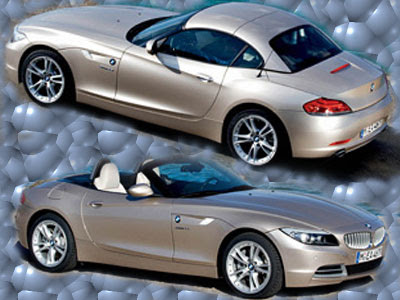
2010 BMW Z4 Roadster is the first all-new, top-to-bottom redesign of the Z4 model which was originally launched in 2002.
The 2010 Z4 has a sleeker profile and more subtle "flame surfacing" body lines than the previous model. In general the car has a more balanced and matured appearance to it. That's not to say the roadster has lost any of its visual appeal, it's just been refined and tweaked to fit better with the current BMW styling direction.
The front end of the 2010 BMW Z4 has undergone the most obvious transformation. The headlights are thinner and sweep back further into the wheel arches, and the trademark BMW kidney grilles have been elongated to better match the headlights. Down the sides the controversial styling slash which intersected the fender mounted BMW badge has been replaced by a more conventional panel. The BMW badge is now fitted just forward of the doors and adjacent to the side indicators which are cleverly integrated into the metalwork.
Unlike the original Z4 Roadster which used a fabric roof, the 2010 model is fitted with a retractable metal roof which folds away neatly into the rear storage area. 20 seconds is all it takes for the roof to electronically raise or lower itself.
The 2010 BMW Z4 is offered with a choice of three different engine options. The Z4 sDrive23i model is equipped with a 2.5 litre inline 6 cylinder which develops 204 horsepower. The Z4 sDrive30i is fitted with a 258 horsepower / 228 lb-ft of torque naturally aspirated 3.0 litre 6 cylinder. The top level Z4 is the sDrive35i version which is powered by a twin-turbocharged, 3.0 litre, inline 6 cylinder which pumps out 306 horsepower. With this engine the Z4 can hit 62 mph in just 5.1 seconds. The Z4 can be fitted with either a 6 speed manual gearbox or a 7 speed dual-clutch transmission.

Monday, December 7, 2009

2010 Acura TSX Sports Sedan V-6 Engine All-New TL Performance Luxury Sedan.

2010 Acura TSX Sports Sedan

Acura
offers a full line of technologically advanced performance luxury vehicles through a network of 270 dealers within the United States. The Acura lineup features five distinctive models, including the RL luxury performance sedan, the TL performance luxury sedan, the TSX sports sedan, the turbocharged RDX luxury crossover SUV and the award-winning MDX luxury sport-utility vehicle.
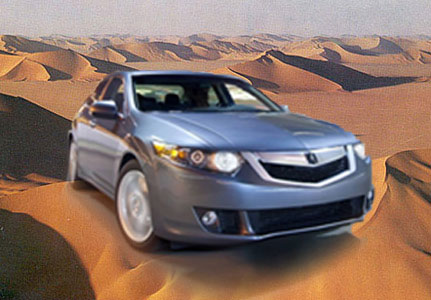
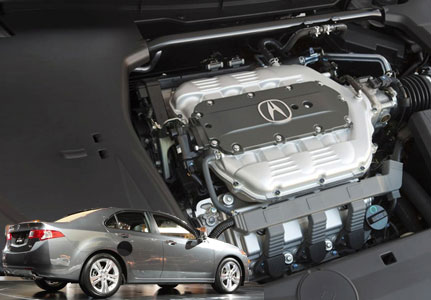
Acura debuted an all-new V-6 model for its TSX sports sedan line-up at the Chicago Auto Show today. Scheduled to go on sale this summer, the 2010 TSX V-6 will be equipped with a powerful 3.5-liter engine, exclusive suspension tuning, larger diameter wheels and additional enhancements.The introduction of the TSX V-6 at the Chicago Auto Show is the first step in a series of major advancements to the 2010 Acura lineup. Almost every Acura sedan and SUV will receive significant enhancements for the 2010 model year.
2010 Acura TSX Sports Sedan

“The automotive market may be slowing down, but not Acura,” said Jeff Conrad, vice president of Acura sales. “With improved acceleration and handling, the new 280 horsepower V-6 adds even more sport to the already sporty nature of the popular TSX sports sedan.”
Since its redesign last year, the TSX has shattered sales records to become one of Acura’s best-selling sedans. As the entry point to the Acura brand, the four-cylinder TSX has won over customers with its nimble handling, agile driving feel and balanced performance. The V-6 model adds a new level of power on top of these winning traits for a more sporty and spirited driving experience. The V-6 will surely satisfy driving enthusiast’s appetite for a fun-to-drive, yet refined sports sedan.
2010 Acura TSX Sports Sedan

With the introduction of a V-6 powered TSX, Acura will fill a niche in its lineup between the four-cylinder TSX and the all-new TL performance luxury sedan. With the TL moving more upscale following its redesign in the 2009 model year, the TSX V-6 will be aimed squarely at youthful buyers who want a performance-oriented sports sedan in a more personal size.
A new TSX powertrain choice means performance luxury buyers can enjoy a 280 horsepower 3.5L V-6, with sophisticated VTEC® valvetrain control and a dual-stage induction system. For maximum performance and efficiency, the engine will be coupled to Acura’s Sequential SportShift automatic transmission, with intelligent features such as Grade Logic Control and Shift Hold Control. If the driver desires, the Sequential SportShift transmission can also be operated manually, via steering-wheel mounted F1®-style paddle shifters.
2010 Acura TSX Sports Sedan

The new TSX model will feature a state-of-the-art, double-wishbone front and multilink rear suspension system to provide excellent ride, handling and control. To generate sportier handling, the V-6 model will also use exclusive suspension tuning along with 18-inch split five-spoke aluminum wheels, fit with Michelin Pilot all-season tires. The larger wheels and tires will help distinguish this performance- minded TSX, as does the slightly revised front fascia and a V-6 badge on the trunk.
The TSX V-6 model will be generously equipped with the latest advancements in safety technology and is anticipated to achieve the highest ratings in both government (NHTSA)* and independent (IIHS) crash testing – including garnering IIHS’s TOP SAFETY PICK.
Like all Acura models, the new TSX will feature an exceptional level of standard equipment, including leather-appointed interior, power moonroof, automatic climate control, a premium seven-speaker sound system with CD, AM/FM tuner, XM® Satellite Radio, Bluetooth® HandsFreeLink® , USB port and AUX jack music interface and more.
2010 Acura TSX Sports Sedan

Similar to the four-cylinder TSX, the V-6 model will be available with the optional Technology Package that includes the AcuralinkTM satellite navigation system with rear-view camera and the Acura/ELS Surround® premium audio system for a top-in-class audio experience.

Saturday, December 5, 2009

2009 Maybach Landaulet Exclusive Luxury Saloons Powered By an Uprated V12 Engine

2009 Maybach Landaulet Exclusive Luxury Saloons

The tradition-laden Maybach luxury brand is adding a fifth model to its line-up. The new Maybach Landaulet resurrects the legend of the classic luxury landaulets, a feature of which is that only the chauffeur’s area is closed. An extra-large folding roof opens up over the pampered rear-seat passengers when required, leaving no obstructions between them and the blue sky above. The Maybach Landaulet thus offers a majestic open-air experience currently unrivalled by any other automobile. Boasting a certain romantic quality and allowing its passengers the opportunity to savour closeness to nature, this exceptional vehicle also features the ultimate in comfort and technological sophistication and as such sets the new standard for the world’s most exclusive luxury saloons.
2009 Maybach Landaulet Exclusive Luxury Saloons

In November 2007, Maybach had revived the aura of the grand carriages of days gone by with its Landaulet study. The European premiere of this sparkling white one-off study is taking place at the 78th Geneva Motor Show. Even beforehand, however, the response from the public to this masterpiece has been overwhelming, so much so that Maybach decided to offer the hand-built Landaulet based exclusively on the customer’s own specifications.
A limited number of vehicles will be built in the Manufaktur workshops in Sindelfingenover a restricted period. The finest materials are painstakingly handcrafted by select specialists to meet the customers’ exacting requirements – just as the discerning Maybach clientele would expect. According to the latest Luxury Brand Status Index (LBSI), a survey of 531 U.S.millionaires recently voted Maybach the most prestigious luxury automobile brand.
2009 Maybach Landaulet Exclusive Luxury Saloons

The Maybach name epitomises high-end luxury motoring. It stands for effortlessly superior automotive engineering at the very highest level, timeless and stylish elegance, and precision craftsmanship. Since approximately two-thirds of Maybach customers wish to tailor their cars exactly to their own tastes and ideas, Maybach is constantly expanding its exclusive range of customisation options.
In technical terms the Maybach Landaulet is based on the Maybach 62 S - which can claim to be the world's most powerful series-produced chauffeured saloon. Maybach technicians have removed the rear roof module in order to afford passengers an unobstructed view of the sky above. The side walls have been invisibly reinforced with an integral tubular steel structure. As these measures have not altered the silhouette of the luxury saloon, the generously dimensioned doors and the complete interior with reclining seats remain unchanged.
2009 Maybach Landaulet Exclusive Luxury Saloons

Maybach has adapted the luxurious rear compartment to the requirements of open-top motoring. For instance, the rear head restraints are slightly larger than on the saloon and effectively help reduce wind turbulence.
Designed from the outset as a chauffeur-driven limousine, the Maybach Landaulet is equipped with a partition. The lower section of the partition consists of an aluminium sandwich structure. The upper section comprises an electro-transparent laminated glass panel that can be lowered by electric motor.
2009 Maybach Landaulet Exclusive Luxury Saloons

The Maybach Landaulet is powered by an uprated V12 engine which Maybach engineers have developed further for the Maybach 57 S and Maybach 62 S together with the specialists at Mercedes-AMG. Thanks to twin turbochargers and water intercooling, the V12 develops a maximum output of 450 kW/612 hp from a displacement of 5980 cubic centimetres. This is continuously available between 4800 and 5100 rpm, and the engine also delivers an impressive maximum torque of 1000 newton metres between 2000 and 4000 rpm.
2009 Maybach Landaulet Exclusive Luxury Saloons

Equipped with the AIRMATIC DC (Dual Control) electronically controlled air suspension system and the Adaptive Damping System (ADS II), the Maybach Landaulet achieves an outstanding level of ride comfort whilst at the same time proving that even a prestigious automobile can display excellent agility and handling qualities.

Thursday, December 3, 2009

2010 Jaguar XFR Dramatic Expression of a Bold New Jaguar Design Language

2010 Jaguar XFR
The 2010 model year XF features all-new 5.0-liter direct-injection V8 engines. There are also significant trim and specification changes – including many new features unique to the new XFR – and the introduction of a new Portfolio derivative.
When it was introduced last year, the XF was soon recognized as a dramatic expression of a bold new Jaguar design language. It also soon became apparent that here was a car where the driving experience exceeded the expectations created by the striking appearance. Now, the new XFR takes this driving experience to new levels, shifting the balance even further towards dynamic performance while still retaining the XF’s core values as a refined and luxurious sports sedan.
2010 Jaguar XFR
The enhanced exterior styling of the Jaguar XFR moves those sporting credentials on even further, to deliver the ultimate expression of Jaguar's new saloon car design language - carrying a number of visual design cues that are intrinsic to Jaguar's 'R' car philosophy. Its unique front-end design has a larger lower grille with new black-finished mesh, plus chrome outboard air intakes. The upper mesh grille retains XF's bright finish, while the bonnet carries distinctive louvres.
2010 Jaguar XFR
The Jaguar XFR's sporting character is clearly apparent in the 20-inch Nevis alloy wheels. It is the only car in its class to offer this size of wheel as standard specification. Those twin-seven-spoke wheels bear the wording 'Jaguar Supercharged' embossed around their centres, and are wrapped tightly around silver-grey brake callipers, which carry the evocative 'R' logo.The interior design theme is modern and individual.
2010 Jaguar XFR
The supercharged 5.0-litre V8 that powers the new XFR is Jaguar's new flagship engine, but it is only half of the petrol engine story - a naturally-aspirated version of the all-new engine brings additional advanced technologies and performance to other models in the XF range.
Power comes from an all-new 5.0-liter direct-injection supercharged V8 engine delivering 510bhp and 461lb-ft of torque. Immediately recognizable thanks to unique new 20-inch wheels, a new front end design with revised chrome air intakes, 'Supercharged' hood louvres, four polished exhaust tailpipes, an aerodynamically functional rear spoiler and side sills, the new XFR also sports discreet ‘R’ badging.
The new XFR features Active Differential Control and Adaptive Dynamics – technologies being introduced for the first time on this and the XKR sports car. The electronically controlled differential and suspension system work together to optimize traction under hard acceleration and cornering – highly appropriate for a car that offers an electronically limited top speed of 155mph and reaches 60mph from standstill in just 4.7 seconds. The XFR also adds a faster steering ratio and uses the XF’s largest ventilated disc brakes – although every version of the XF with the new, more powerful engines features upgraded braking specification.
2010 Jaguar XFR
The attributes that marked out the XF at launch are still very much new and in the public eye. The four-door XF has the visual excitement of a coupe, but room inside for five adults to enjoy an interior wholly contemporary in style yet uniquely Jaguar.
Jaguar has developed a unique, intelligent oil-pump pressure relief valve (PRV) which senses oil pressure deep in the engine's oil galleries to control the oil pump delivery. As a result, oil pump frictional losses are reduced during the warm-up period. New engine oil has a lower viscosity, contributing to an extension in service intervals from 10,000 miles to 15,000 miles or 12 months. Both V8 engines are now fitted with an electronic oil level sensor feature for added peace of mind.
2010 Jaguar XFR
Minimising internal friction is key to improving fuel consumption and CO2 emissions, and as such was a key aim when it came to the design of the engines. As a result, the new Jaguar AJ-V8 Gen III engines achieve another best in class, setting a new industry benchmark for cranktrain efficiency.A sixth-generation, twin vortex system (TVS) supercharger is fitted to the Jaguar XFR's 510PS engine.
The all-new 5.0-litre AJ-V8 Gen III and the 3.0-litre diesel AJ-V6 D Gen III engines transmit power through an enhanced version of Jaguar's acclaimed ZF 6HP28 electronically controlled, six-speed transmission. Additional clutch plates and an uprated torque converter have been added for the supercharged V8 to facilitate the extra power.
 

blogger templates | Blogger